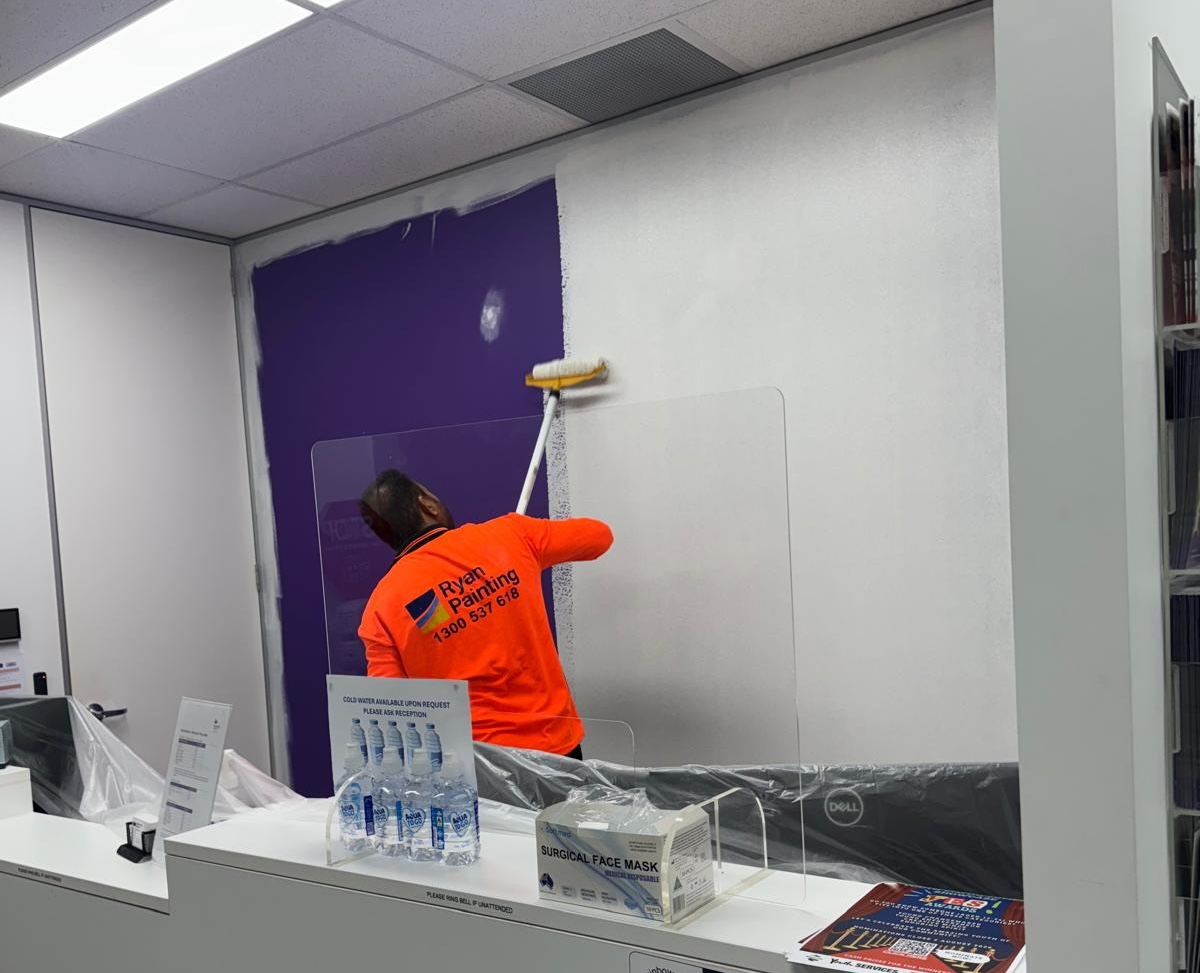
Repainting a commercial property is rarely as simple as choosing a colour and booking a painter. For an operating business, the project also needs to fit around employees, customers, tenants, equipment, access requirements and day-to-day operations.
A well-planned repaint can refresh a property, improve its presentation and help protect surfaces without creating unnecessary disruption. The key is to treat the work as a project that requires preparation, scheduling and clear communication.
Start With a Property Assessment
Before deciding when or how to repaint, it is useful to assess the current condition of the building.
Look for visible signs of deterioration such as peeling or flaking paint, cracking, staining, fading, water-related damage or areas where the existing coating has lost adhesion. Different surfaces may require different preparation methods and coating systems.
A property assessment can also identify areas that may need additional attention before painting begins.
For example, an office may require more attention around corridors, doors and high-traffic areas, while a warehouse may have larger wall surfaces, exposed steelwork or areas affected by dust and machinery.
Understanding the condition of the property early helps create a more realistic project scope.
Identify Which Areas Need to Be Painted
A commercial repaint does not always mean painting every surface at the same time.
Breaking the property into individual areas can make the project easier to manage. Consider:
- Reception and customer-facing areas
- Offices and meeting rooms
- Corridors and stairwells
- Exterior walls
- Doors and frames
- Warehouse walls and ceilings
- Plant and equipment areas
- Common areas
- High-level or difficult-to-access surfaces
Prioritising areas can also allow work to take place progressively rather than closing the entire property.
Consider Your Business Operating Hours
One of the biggest planning considerations is when the painting work can actually take place.
A busy office, retail premises, medical facility or warehouse may not be able to stop operating for several days. In these situations, the project schedule can be structured around quieter periods.
Depending on the property, this could involve:
- Completing selected areas during weekends
- Working after normal business hours
- Painting one section at a time
- Coordinating work around staff movements
- Separating customer areas from work zones
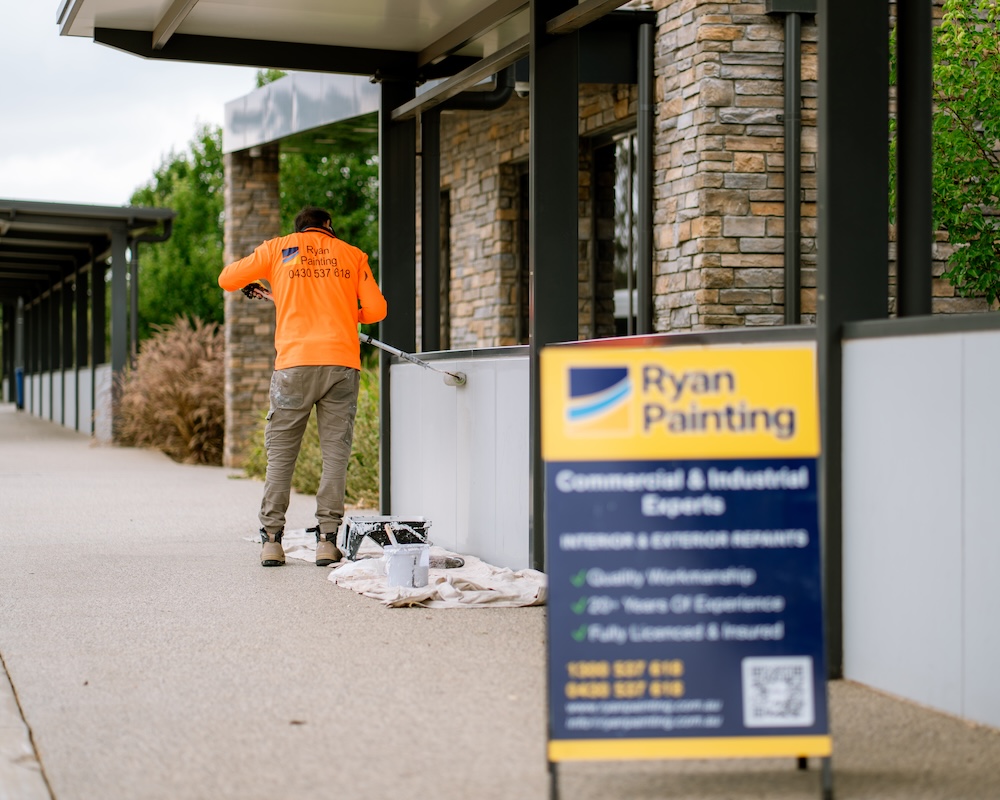
- Scheduling exterior work while the building remains operational
The best approach depends on the type of property and the scope of work.
Plan Access Before Work Begins
Access is another important consideration, particularly for larger commercial buildings.
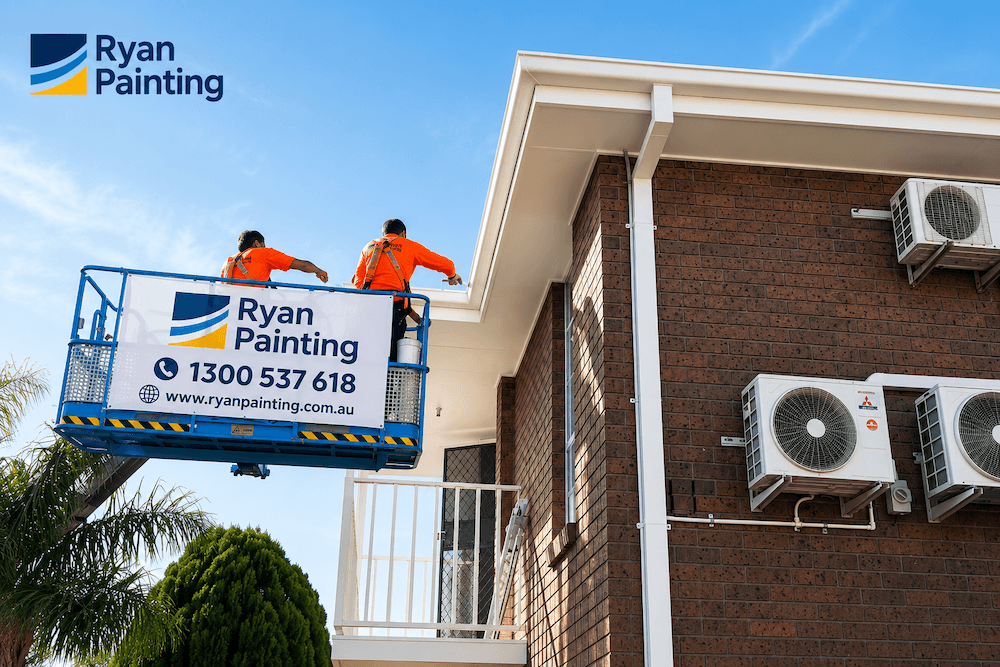
Some surfaces can be reached using standard equipment, while high-level areas, facade, stairwells and difficult-to-reach sections may require specialist access arrangements.
Access requirements should therefore be considered during the planning stage rather than after the project has started.
This can help coordinate equipment, exclusion zones, working areas and the overall project sequence.
For properties requiring elevated access, planning with an experienced high access painting team can help ensure difficult areas are considered from the beginning.
Allow Time for Surface Preparation
Surface preparation is one of the most important stages of any repainting project.
Simply applying new paint over an existing surface may produce a short-term visual improvement, but it does not necessarily address the condition of the substrate underneath.
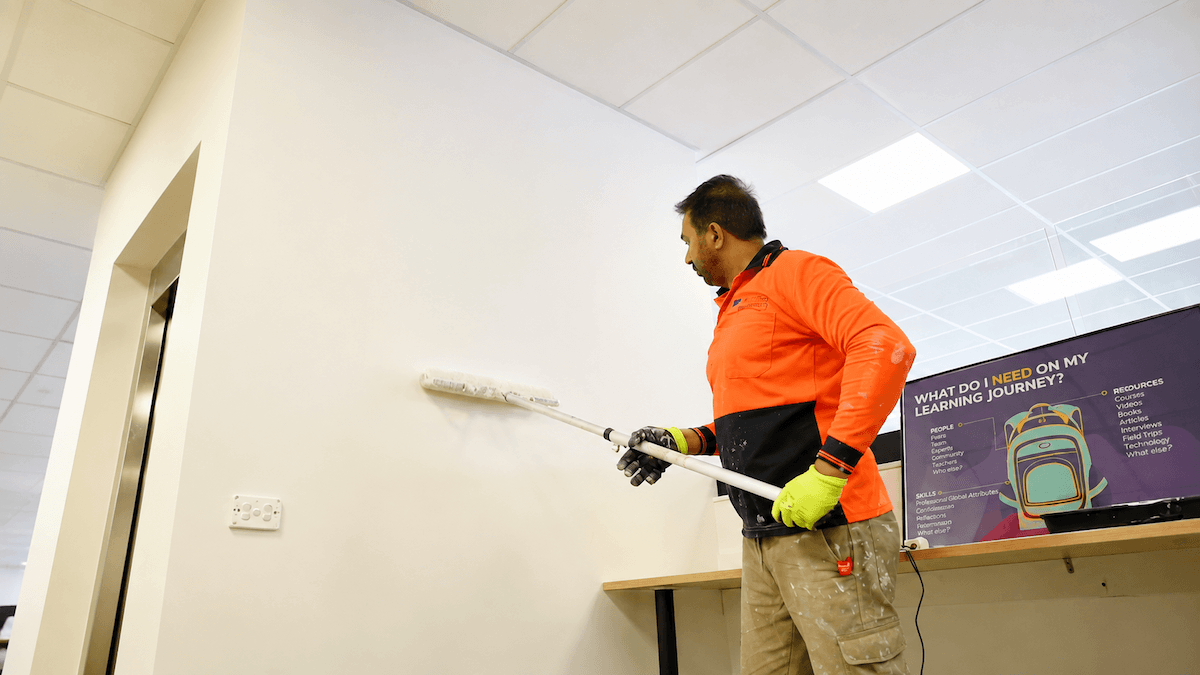
Preparation may include cleaning, scraping, sanding, filling, repairing damaged areas, removing loose coatings and preparing surfaces for the new coating system.
The amount of preparation required will depend on the existing surface and its condition.
Allowing sufficient time for this stage can make a significant difference to the quality and durability of the finished result.
Choose the Coating System for the Environment
Different commercial environments place different demands on painted surfaces.
An office interior may need a finish that is easy to maintain and suitable for frequent cleaning. A warehouse may require coatings capable of handling a more demanding environment. Exterior surfaces need to withstand weather exposure, while industrial environments may require more specialised protective systems.
Rather than selecting paint based solely on colour or appearance, consider:
- Surface type
- Exposure conditions
- Traffic levels
- Cleaning requirements
- Moisture
- UV exposure
- Expected durability
- Maintenance requirements
The right coating system should support the function of the space as well as its appearance.
Protect Employees, Customers and Equipment
A commercial painting project should include a clear plan for protecting people and property while work is underway.
Depending on the environment, this may involve temporary barriers, signage, protection of furniture and equipment, controlled access to work areas and appropriate ventilation.
Good communication is particularly important when employees or customers remain on site during the project.
People should know which areas are unavailable, when work is taking place and how they can safely move around the property.
Break Larger Projects Into Stages
We can complete large properties in stages, not all at once.
A staged approach can make a project more manageable.
For example, an office building might be divided by floors or departments. A warehouse could be separated into operational zones. A retail property may prioritise customer-facing areas before less visible sections.
Staging the work can help businesses maintain normal operations while progressively improving the property.
It can also make it easier to coordinate other maintenance activities that may need to happen alongside painting.
Create a Clear Project Schedule
A useful commercial painting schedule should consider more than the number of days required to apply paint.
The overall project may include:
- Initial inspection
- Scope development
- Surface preparation
- Repairs where required
- Access setup
- Priming or sealing
- Painting
- Quality checks
- Touch-ups
- Final cleanup
Weather conditions can also affect exterior work, so some flexibility may be necessary for outdoor projects.
Having a clear sequence allows everyone involved to understand what is happening and when.
Think Beyond the Immediate Repaint
A repaint is also an opportunity to think about future maintenance.
Once the work is complete, property managers can record the areas painted, coating systems used and approximate completion dates. This information can become useful when planning future maintenance.
Regular inspections can also help identify deterioration before larger repairs become necessary.
Instead of waiting until a property looks significantly worn, a planned maintenance approach can help businesses address smaller issues earlier.
Final Thoughts
A successful commercial repaint is not only about the final colour and finish. Planning, preparation, access, scheduling and communication all contribute to how smoothly the project is completed.
For businesses that need to remain operational during the work, careful staging can make a major difference. The project can be organised around operating hours, priority areas, access requirements and the specific demands of the building.
Ryan Painting Pty Ltd provides commercial painting and repainting solutions across Melbourne, with projects planned around the condition, use and requirements of each property.
For more information about planning a commercial repaint, explore the commercial painting services available through Ryan Painting.